ACCESS TO CARE & COMMUNITY HEALTH
SPECIAL POPULATIONS
Hawaiʻi's communities are multigenerational, multicultural, and deeply interconnected. The health needs of keiki and kūpuna require intentional, dedicated support, with approaches that recognize where people are in their lives and what they need to thrive. Community health centers are uniquely positioned to serve these populations with cultural humility, whole-person care, and a long-term commitment to the communities they call home. HPCA works alongside health centers to strengthen services, build workforce capacity, and advance care models that meet the distinct needs of children, adolescents, and older adults across Hawaiʻi.
Special Populations
→ Keiki (Children)
→ Kūpuna (Older Adults)
Youth Initiatives
Supporting keiki (children) is essential to building a healthier future for Hawaiʻi. Through grant-supported initiatives, including the Pediatric Mental Health Care Access (PMHCA) Program, we work with community health centers to strengthen services for children and adolescents. This work focuses on early support, access to care, and career exposure opportunities that introduce keiki and young people to community-based health care settings.
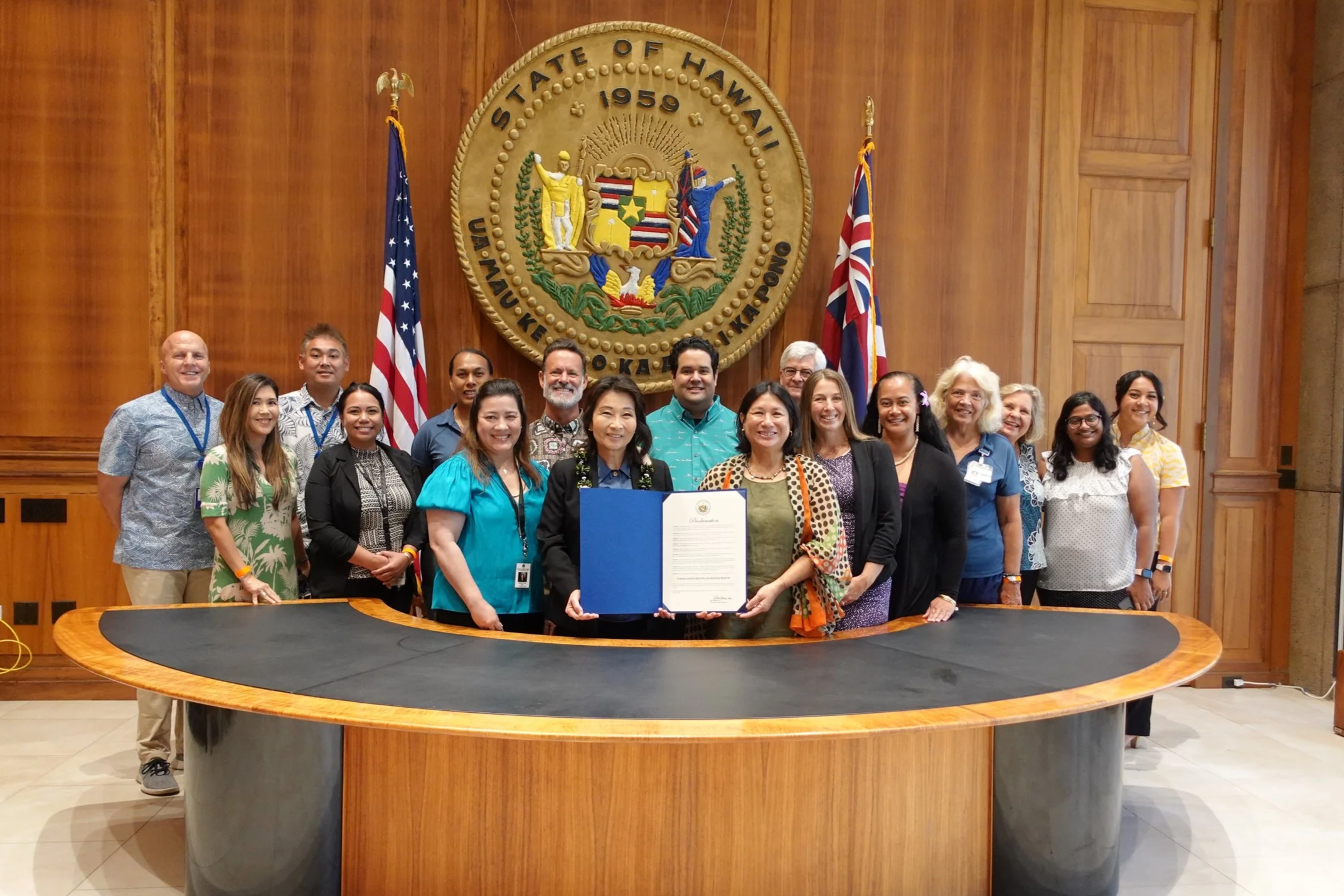
Pictured: Our FQHC partners alongside Lieutenant Governor Sylvia Luke in celebration of School-Based Health Awareness Month (February 2025), as we proudly receive the official proclamation for this momentous occasion. This recognition highlights the vital role that school-based health centers play in increasing access to care for Hawaiʻi’s keiki and reaffirms our collective commitment to supporting student health, wellness, and academic success across the state.
Highlighting the Great Work our health centers Do
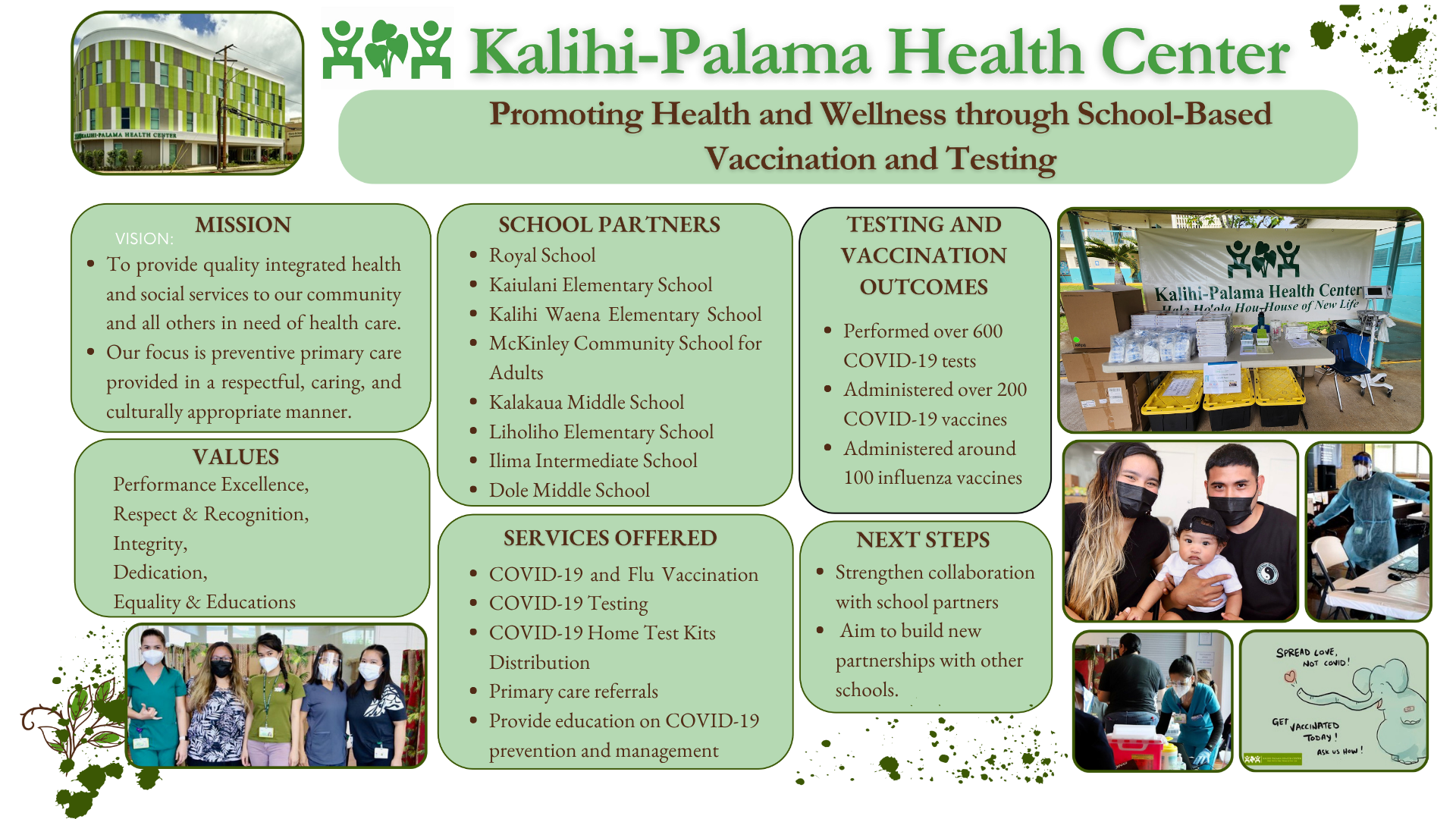
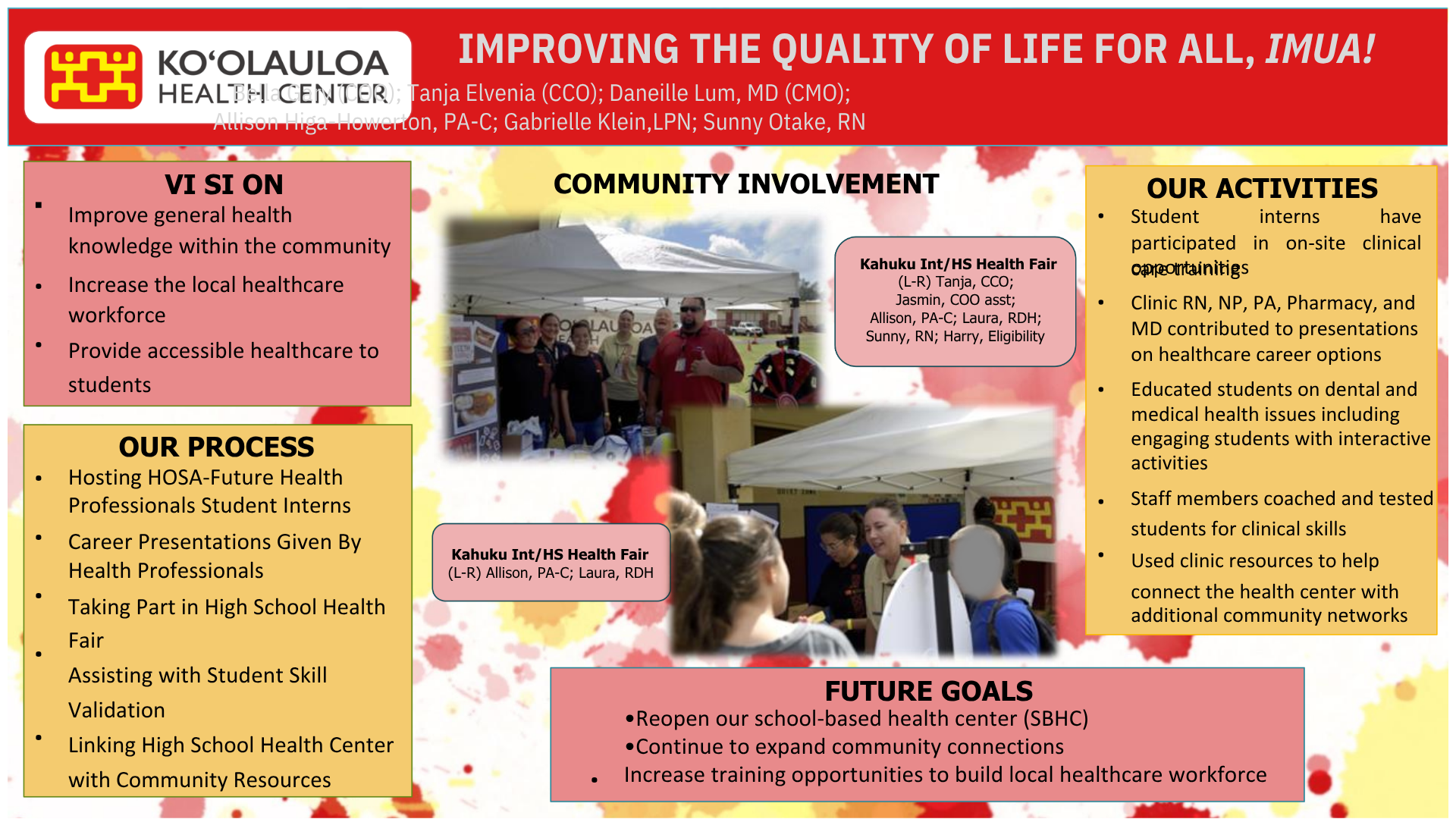
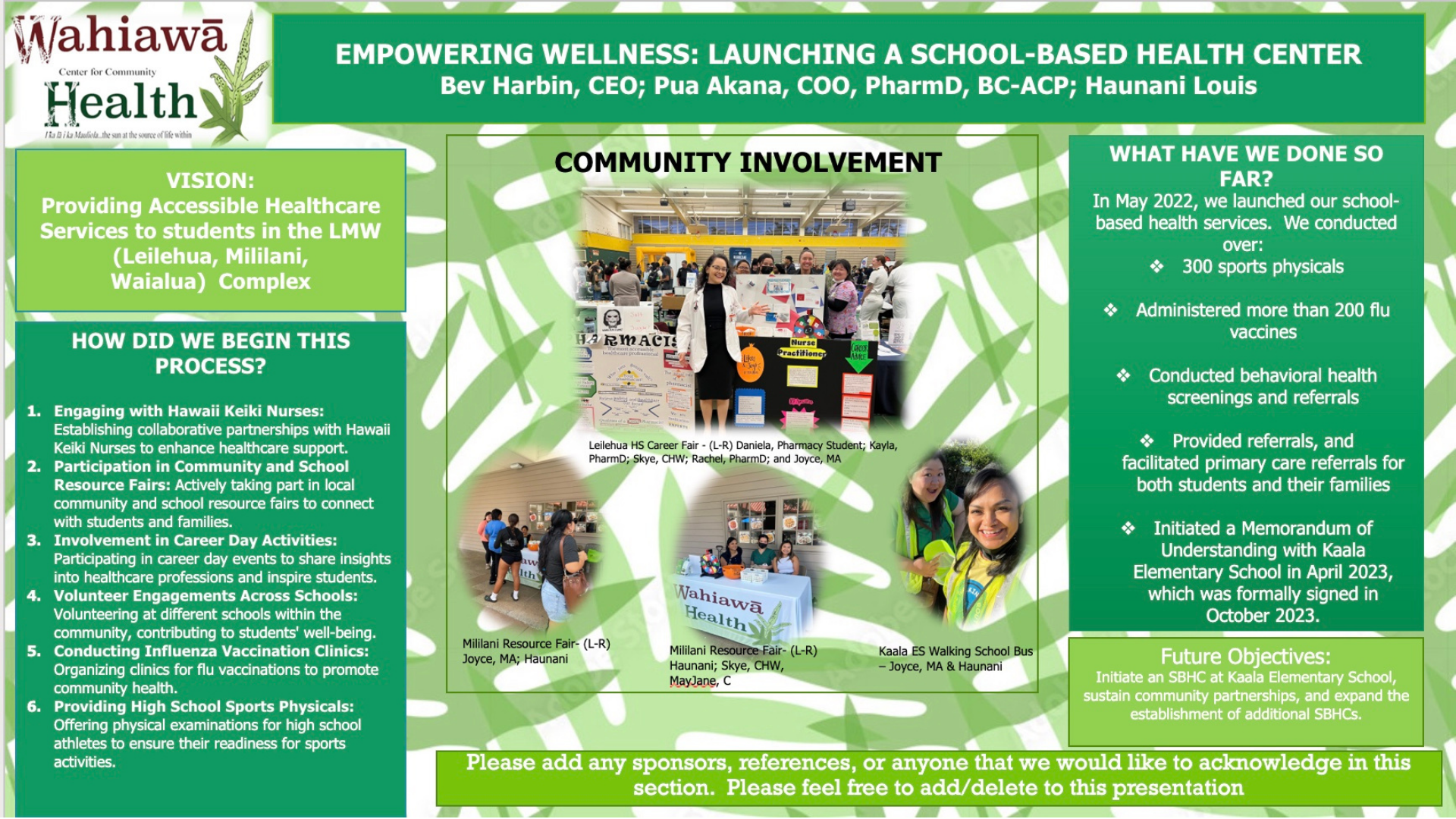
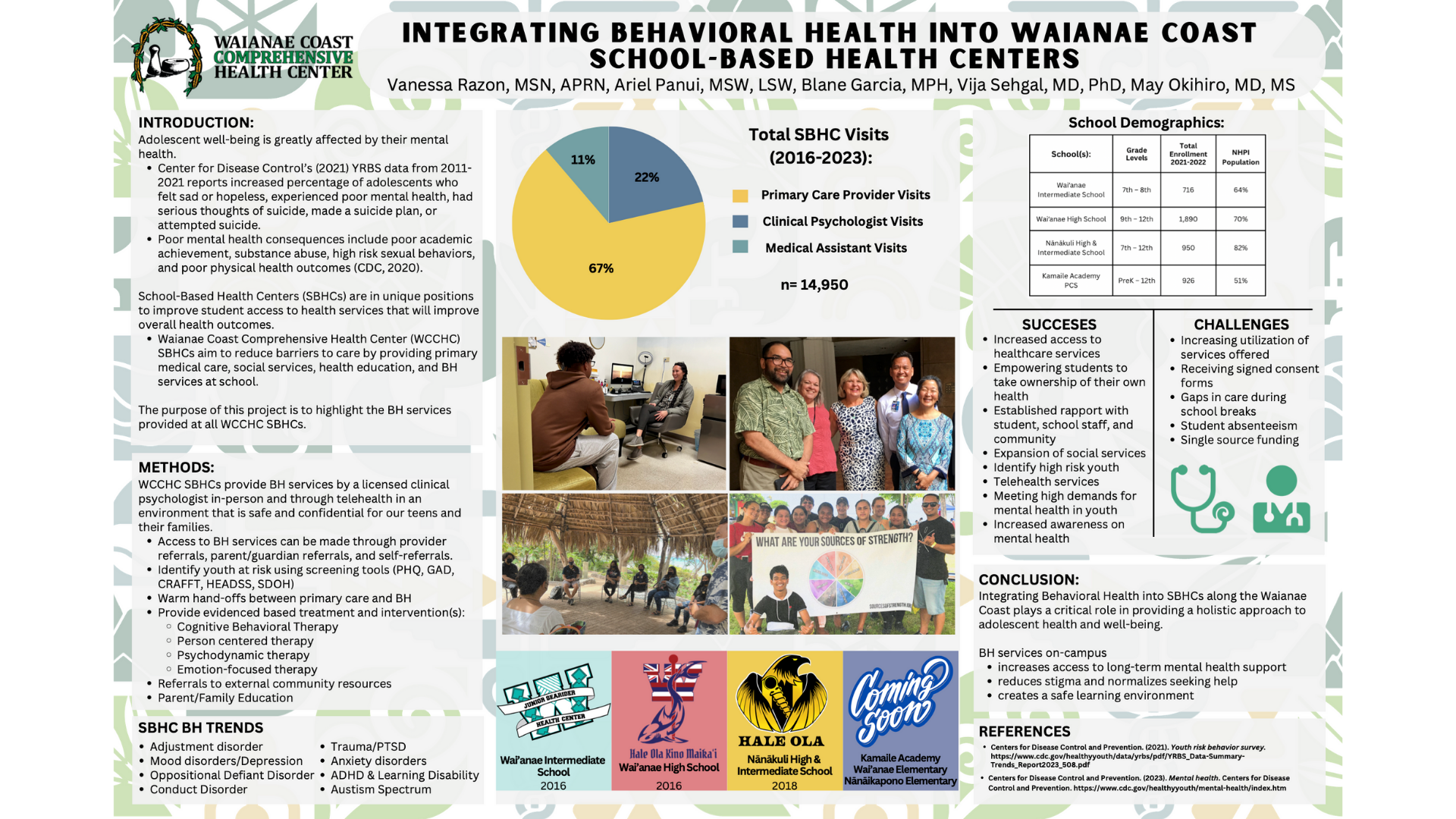
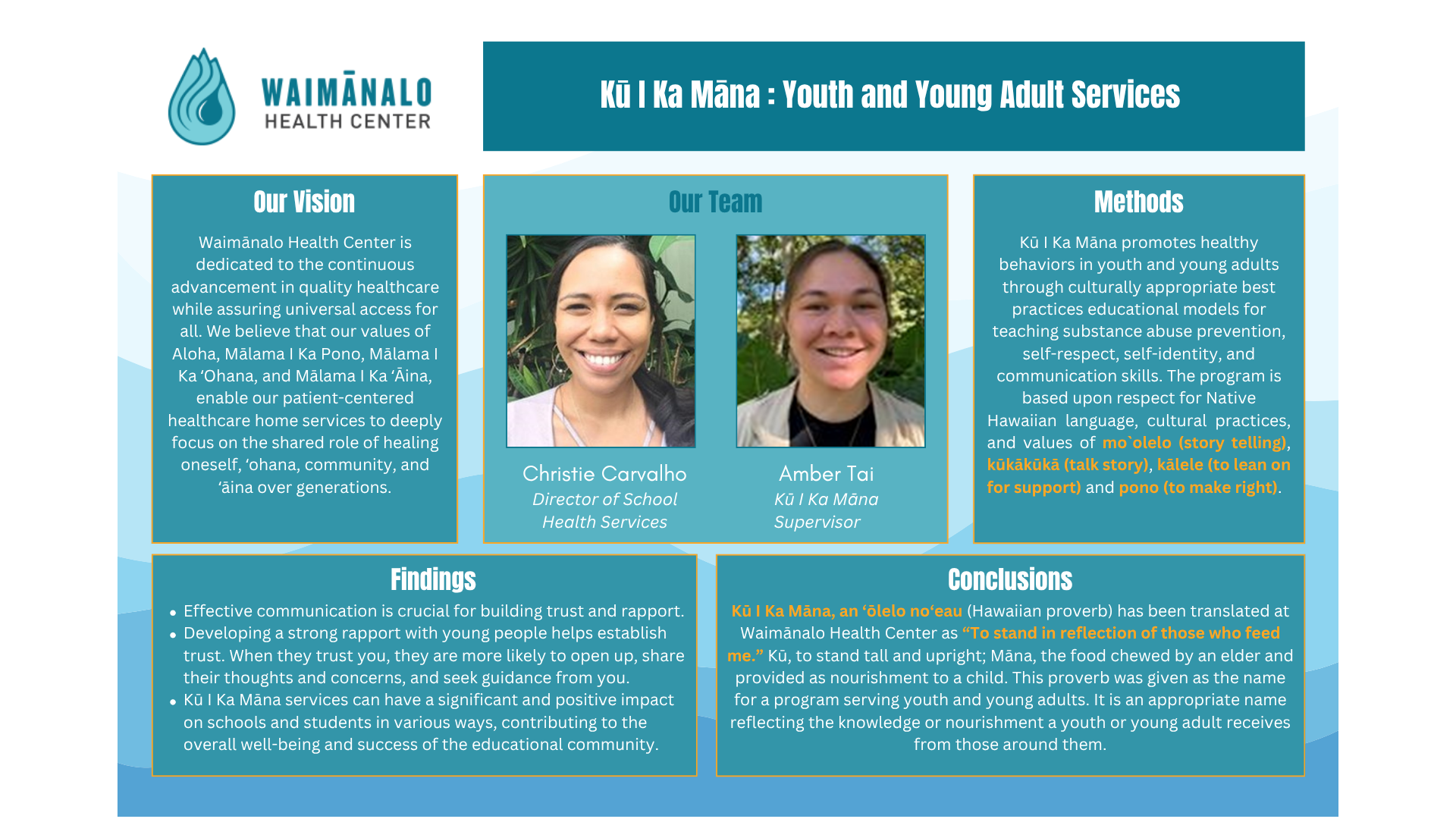
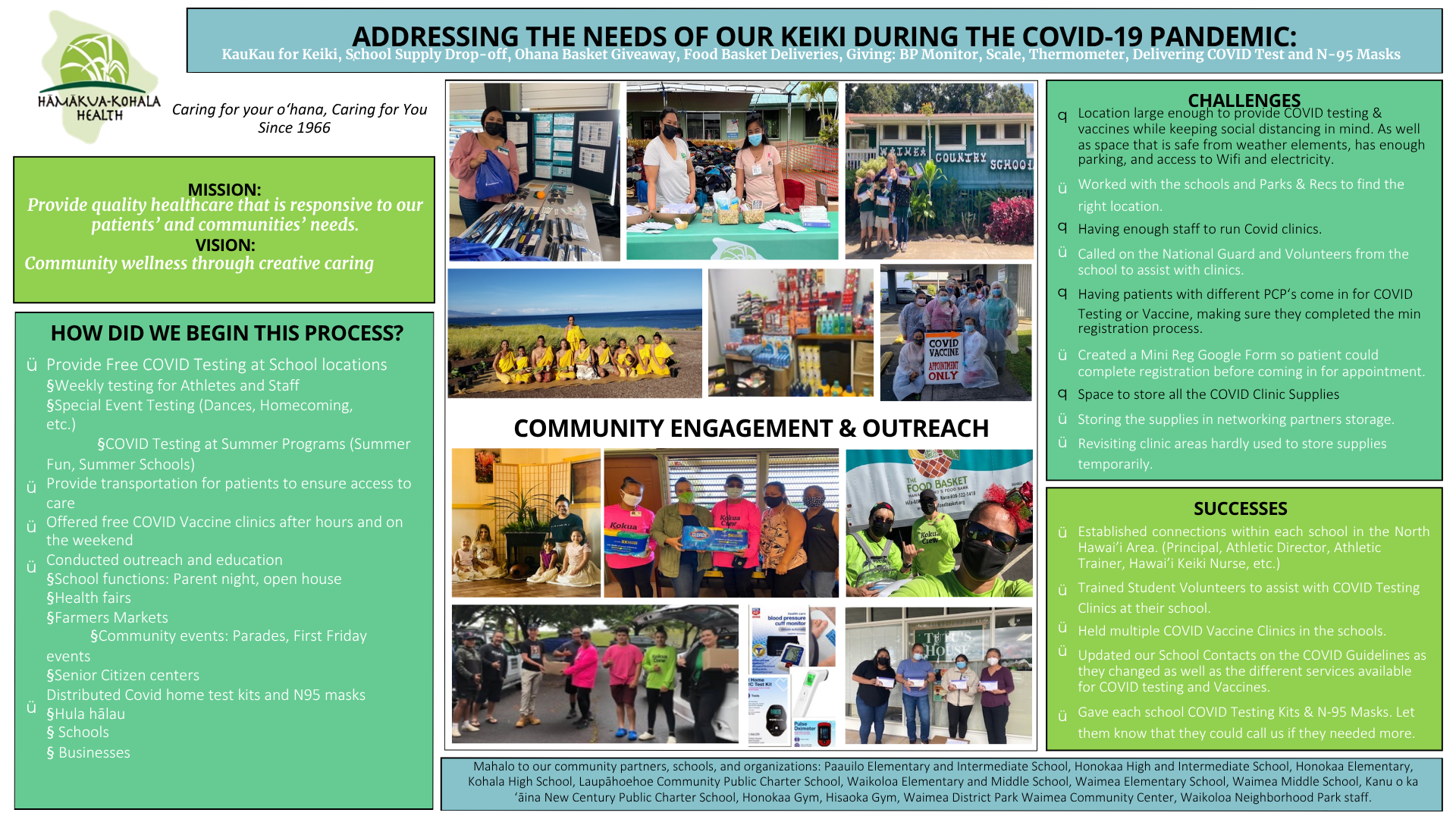
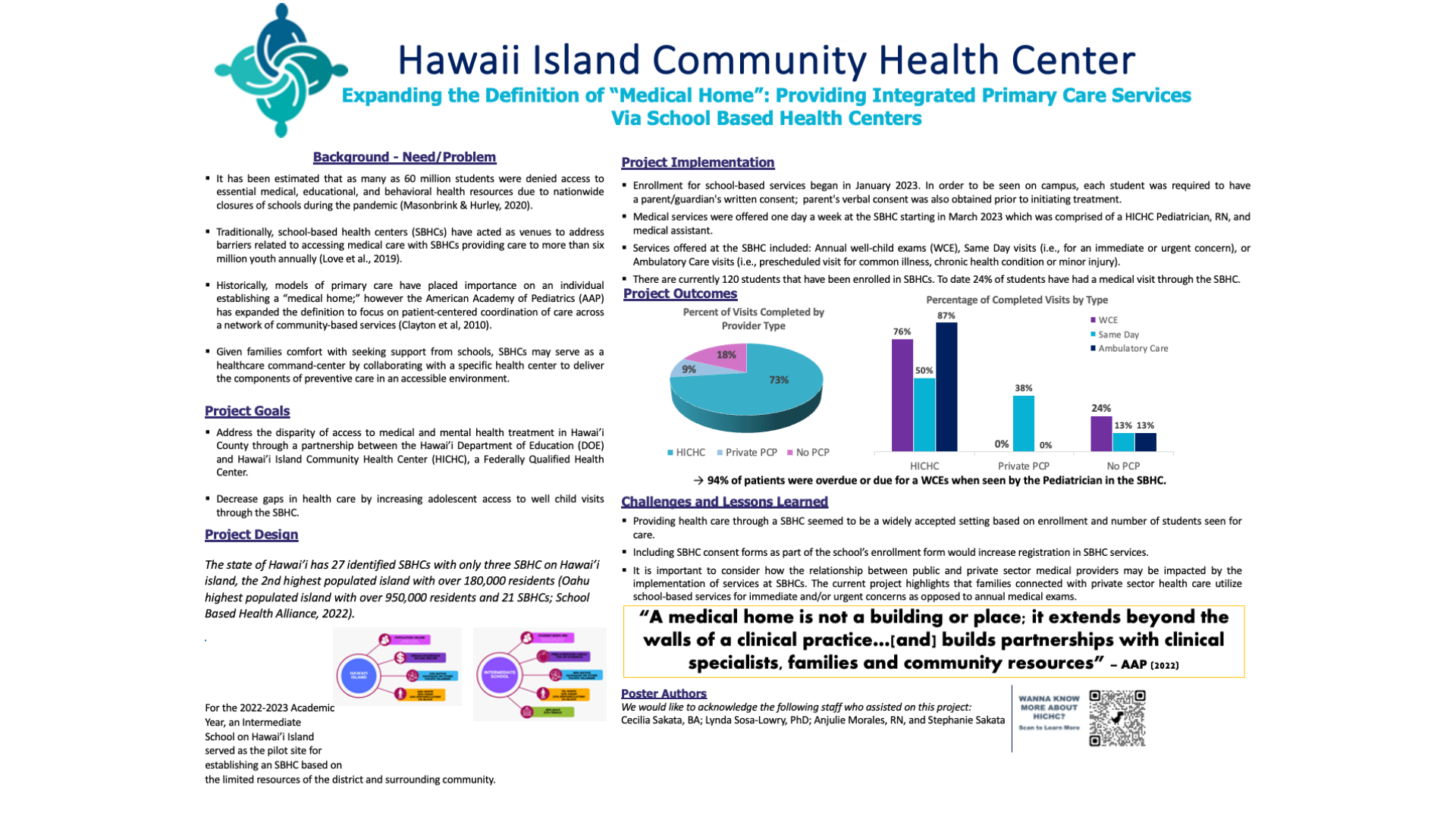
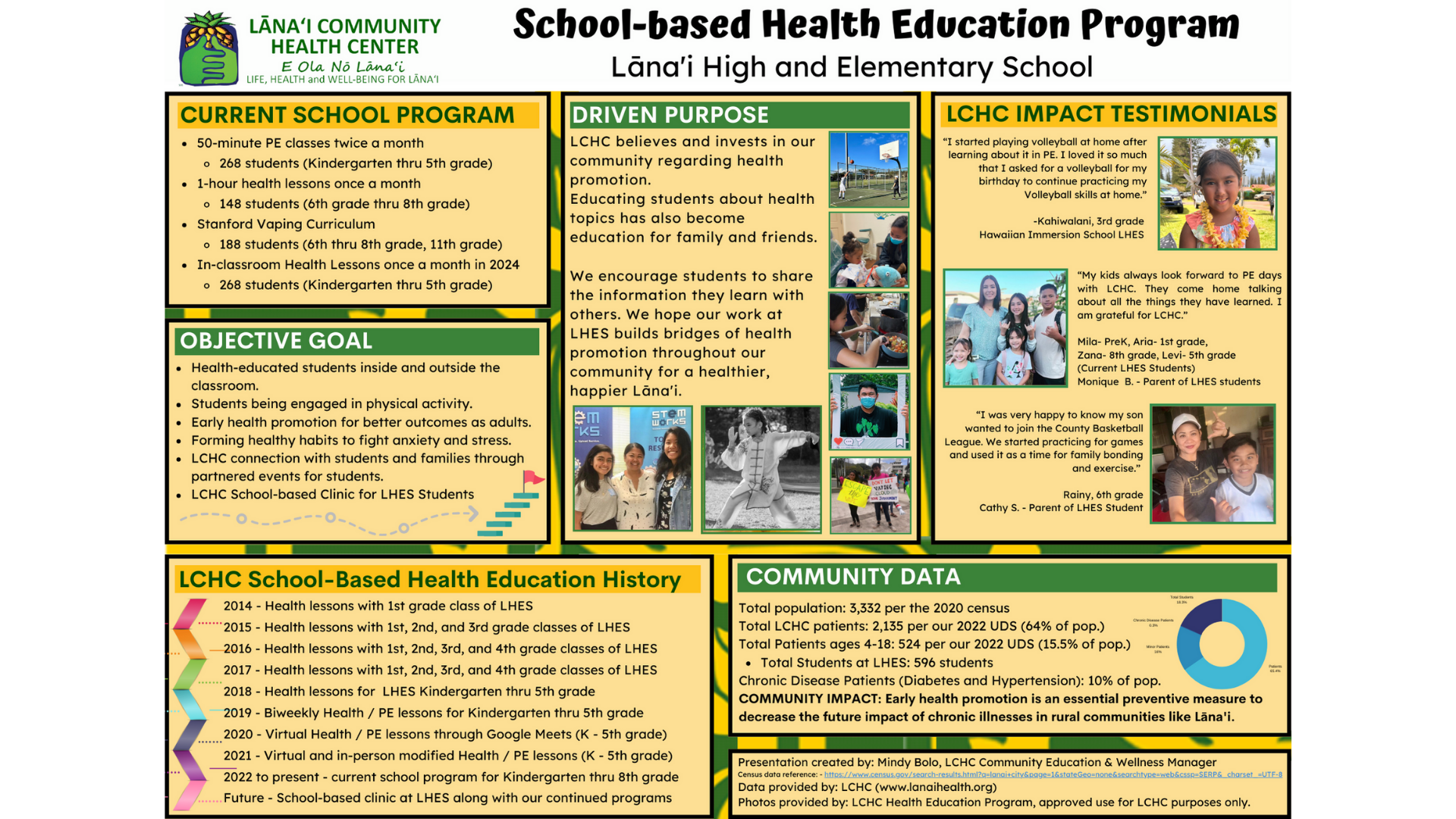
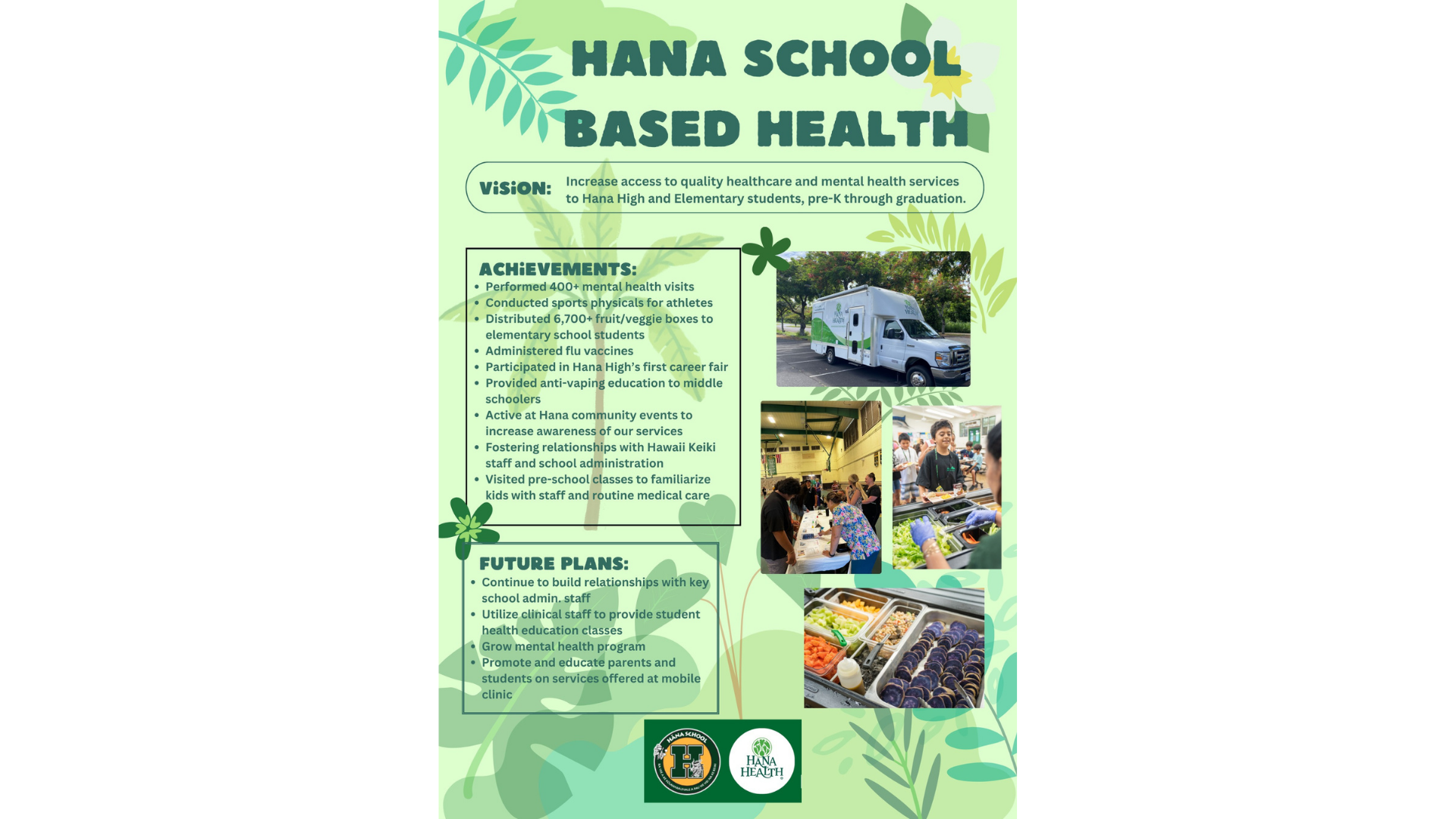
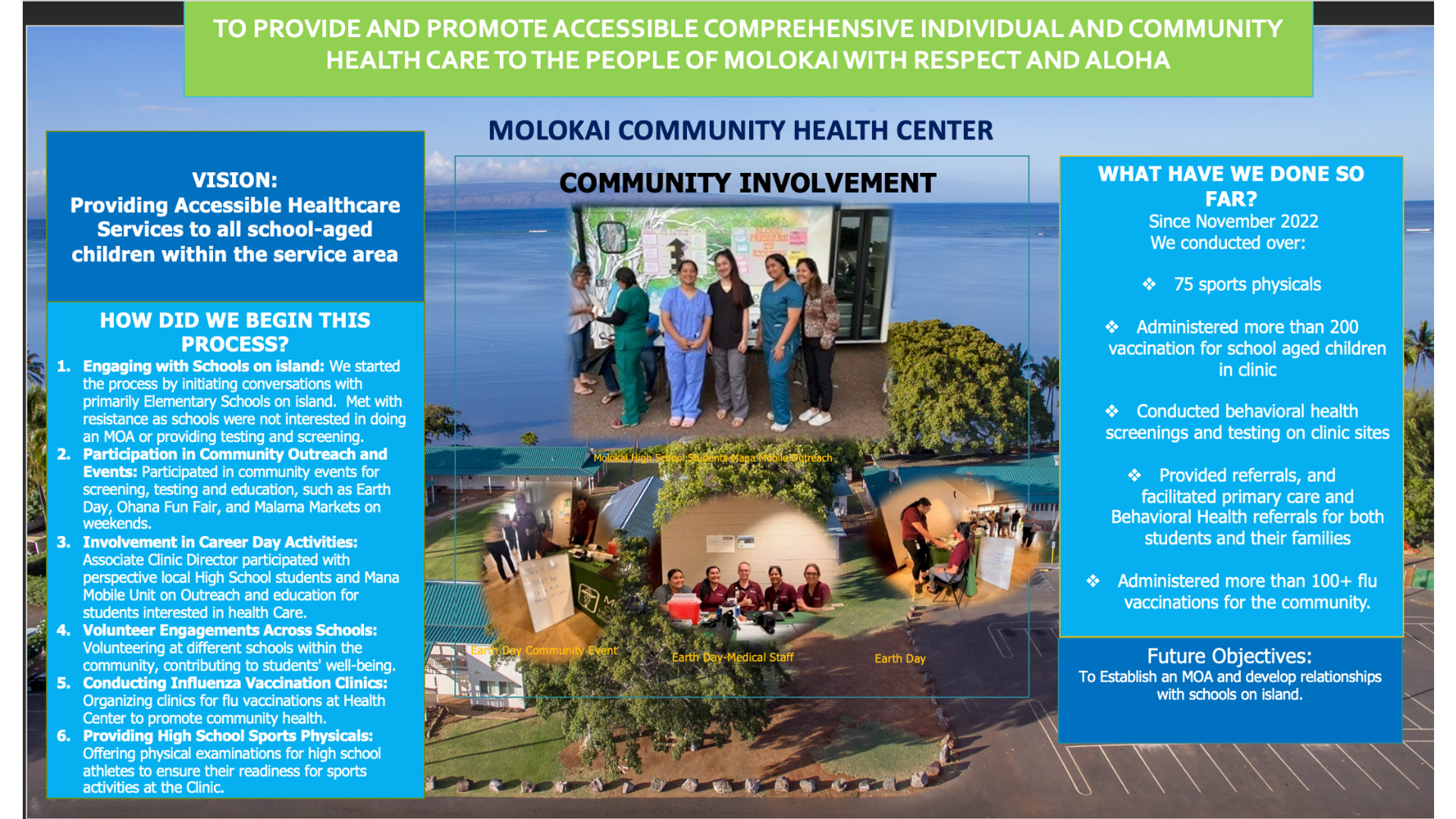
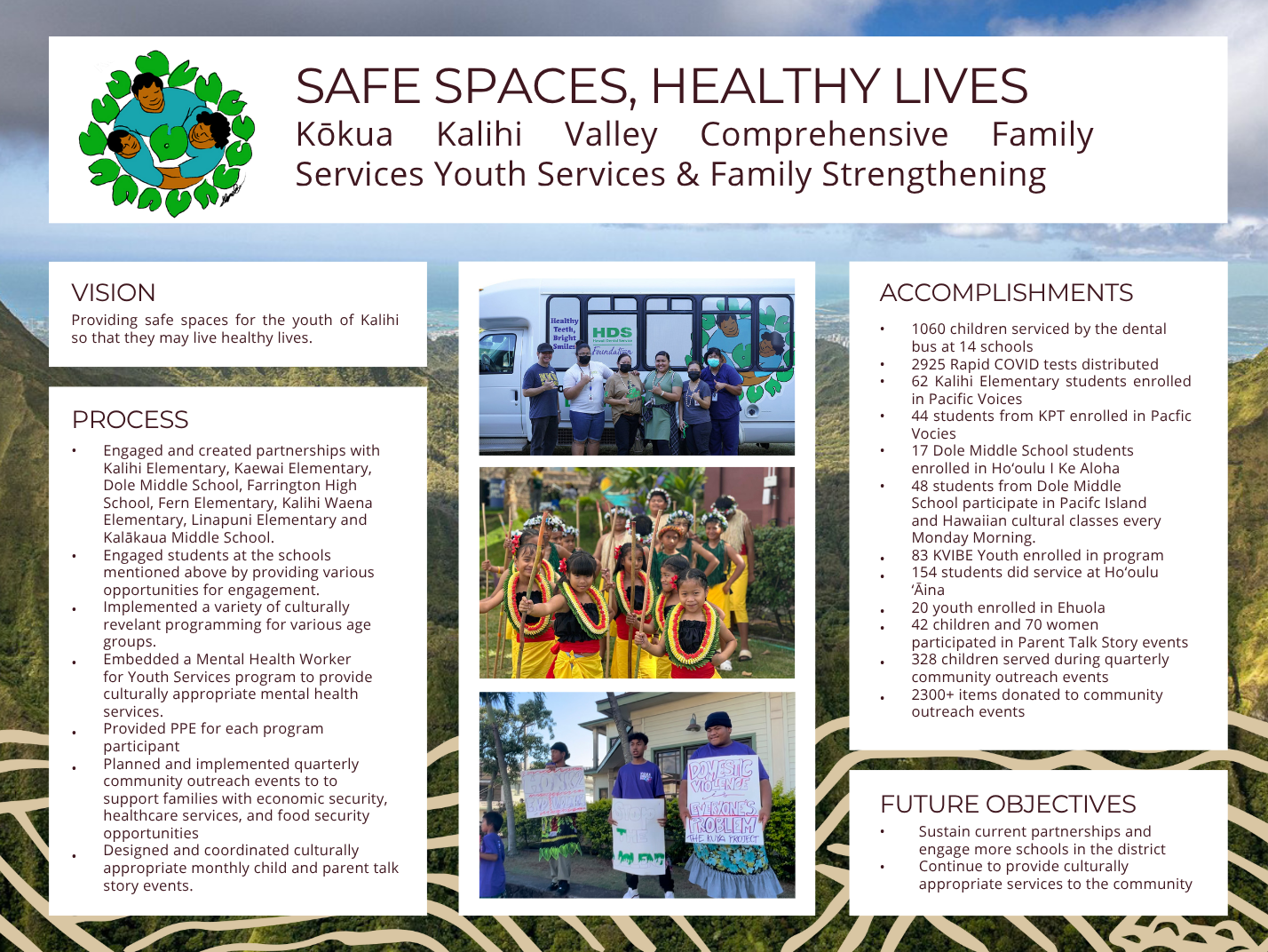
School Health Summit Poster Presentations – November 17, 2023
Snapshots from a day of learning, sharing, and innovation as partners from across Hawaiʻi gathered to showcase school health initiatives and strategies to support student well-being statewide.
Older adult initiatives
Kūpuna (older adults) are central to families and communities across Hawaiʻi, and community health centers play an important role in supporting healthy aging. We work with health centers to advance Age-Friendly Health Systems and deliver care guided by the 4Ms framework. This work helps care teams focus on what matters most, support mobility and safe medication use, and promote approaches that help kūpuna to remain active, supported, and engaged.
Moving Toward Age-Friendly Health Systems
We’ve been working in partnership with the Department of Geriatric Medicine at the John A. Burns School of Medicine, University of Hawaiʻi at Mānoa, to support our health centers in becoming Age-Friendly Health Systems. This collaboration is part of our commitment to providing care that is safe, effective, and aligned with the needs of kūpuna in our communities.
This work is part of the Geriatrics Workforce Enhancement Program (GWEP), a federal initiative supported by the Health Resources and Services Administration (HRSA), which aims to improve health outcomes for older adults by strengthening the workforce that serves them.
What is an Age-Friendly Health System?
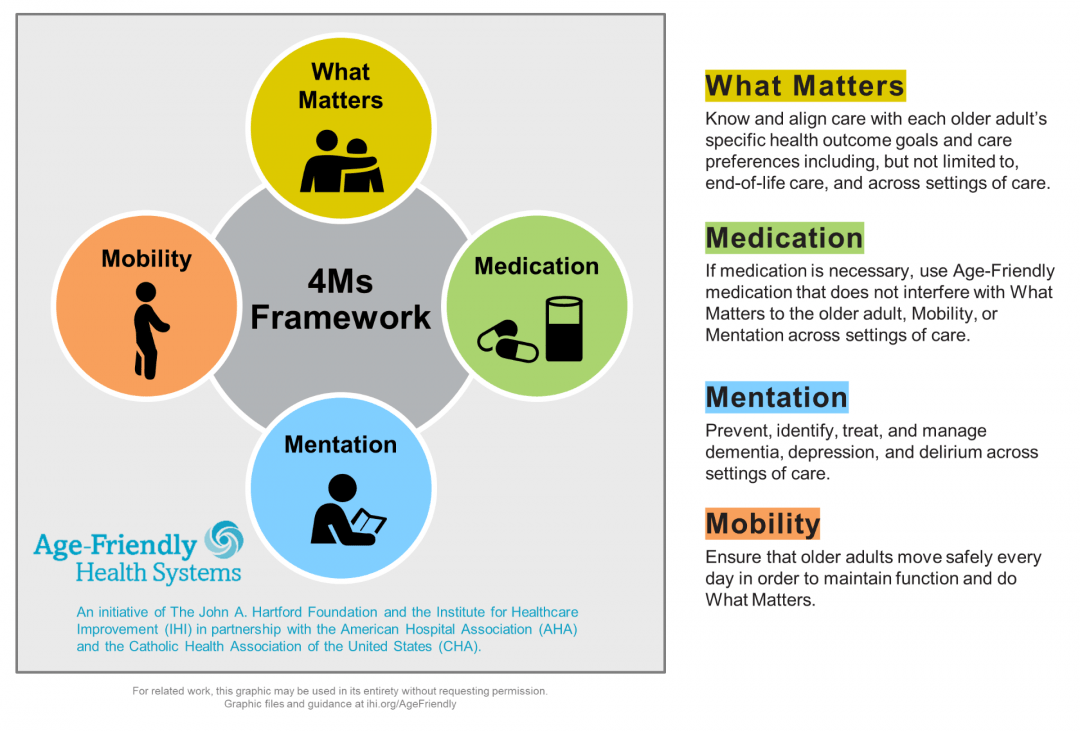
An Age-Friendly Health System is one that consistently delivers care based on what matters most to older adults. It uses a proven framework known as the 4Ms:
What Matters – Understanding and honoring each patient’s individual health goals and preferences
Medication – Ensuring medications are age-appropriate and do not interfere with mobility, cognition, or well-being
Mentation – Preventing, identifying, treating, and managing conditions like dementia, depression, and delirium
Mobility – Supporting safe movement and physical activity to maintain independence and reduce fall risk
Learn more at the Institute for Healthcare Improvement (IHI) website:
https://www.ihi.org/partner/initiatives/age-friendly-health-systems
Explore Age-Friendly Health System site locations in Hawaiʻi:
https://public.tableau.com/app/profile/jenny.lee7869/viz/GWEP_AFHSSites/AFHSSitesB
By integrating the 4Ms into primary care workflows, we’re helping our health centers create environments where older adults feel supported and respected in every stage of aging.
Levels of Recognition
Level 1
Participant – Teams have developed a plan to begin implementing the 4Ms.
Health centers with Level 1 Recognition:
Level 2
Committed to Care Excellence – Teams have documented at least three months of data showing older adults received care aligned with all 4Ms.
Health centers with Level 2 Recognition: