

ACCESS TO CARE & COMMUNITY HEALTH
health-related social needs (HRSN)
Health does not begin and end in the exam room. The conditions in which people live, work, learn, and age shape their ability to stay well. These conditions include economic stability, neighborhood and environmental factors, institutional policies, and social networks. Many of the differences we see in health outcomes are influenced by these factors, and most of which exist outside clinic walls.
HEALTH STARTS OUTSIDE THE CLINIC
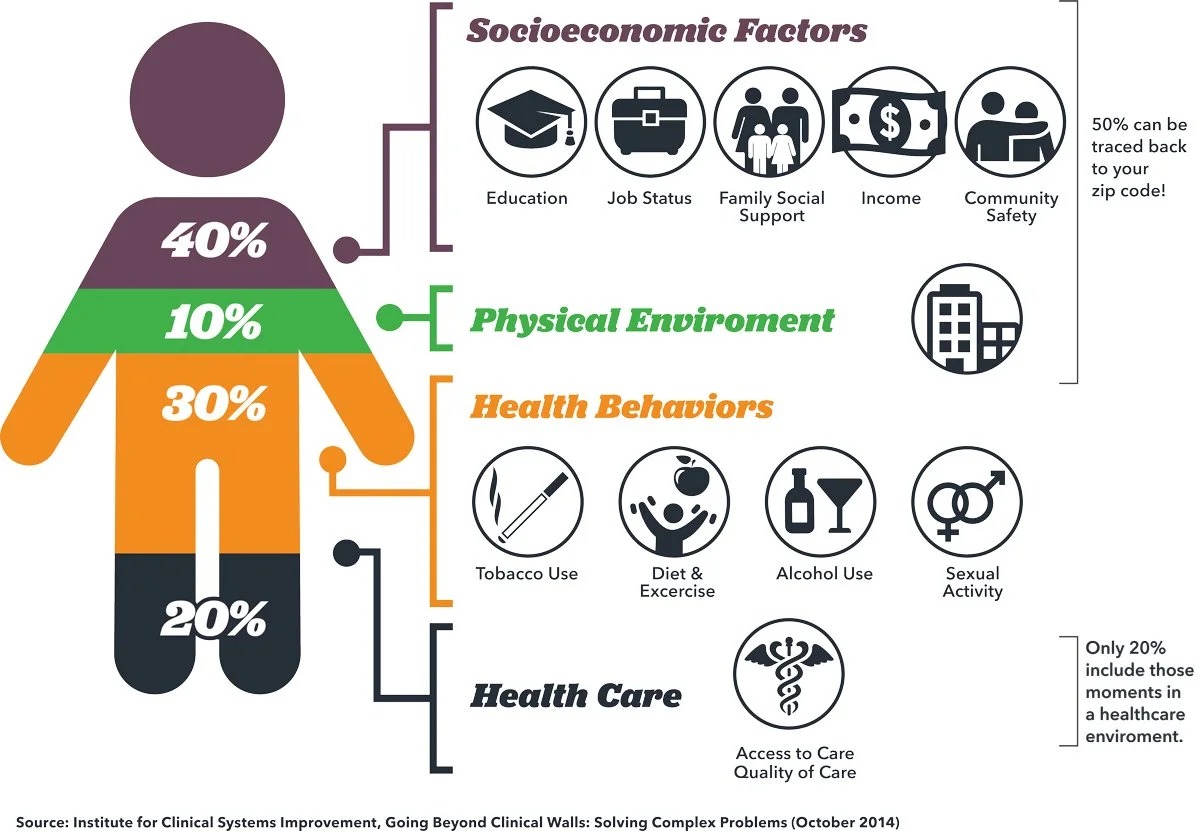
Research consistently shows that clinical care accounts for only a portion of overall health outcomes. Social and economic factors, the physical environment, and health behaviors play a much larger role. This helps explain why, even when high-quality care is available, patients may still struggle to achieve positive outcomes if food access, housing stability, or transportation remain unaddressed.
HPCA supports health centers in strengthening how they identify and respond to health-related needs. Through training and technical assistance, we help centers build practical systems to better understand the challenges affecting their patients and communities, and to respond in a structured, coordinated way.

This includes working with health centers to:
Implement consistent approaches to screening for health-related needs
Improve documentation and data collection to better understand patterns across patient populations
Use data to inform planning and service delivery
Identify and engage community-based organizations in assessment and response efforts
Strengthen referral pathways that connect patients to supportive services
Develop workflows that integrate health-related needs into care planning
Our role is to provide guidance, tools, and structured learning opportunities that health centers can adapt locally. The goal is not to add burden, but to support thoughtful implementation that connects screening to action. By strengthening how health centers identify risk factors and respond to immediate needs, we help build a more informed and coordinated primary care system.
Protocol for Responding to and Assessing Patients' Assets, Risks, and Experiences (PRAPARE)
PRAPARE is a national standardized tool that helps health centers collect and act on social determinants of health data. Developed with community health centers in mind, it supports screening, documentation, and connection to resources that address patients' social and economic needs.
AAPCHO Enabling Services Toolkit
Developed by the Association of Asian Pacific Community Health Organizations, this implementation guide supports health centers in building and strengthening enabling services programs that help patients overcome cultural, linguistic, and logistical barriers to care.
Learn more at aapcho.org